

Fighting Forward
Rosemarie Henkel-Rieger

The global pandemic has laid bare not only the many health-related inequalities but also the many unhealthy economic pre-existing conditions we have been burdened with for decades. For instance:
More than half (56 percent) of all workers in the US between the ages of 25 and 50 are employed at jobs that pay a median annual income of $17,950. While these low-wage workers are a racially diverse group, people of color and women are overrepresented. Nearly one-third of these low-wage workers live below 150 percent of the federal poverty line (about $36,000 for a family of four). Most low wage workers are concentrated in the care, retail, and food industry sectors.
While 20 percent of all households have zero or even negative wealth, the top 1 percent hold 40 percent of all wealth in the United States, increasingly widening the income and wealth gap in our communities. For almost five decades now, the top income earners have accounted for roughly 86 percent of all income gains, while 90 percent of earners have seen their income values decline.
And then there is the crisis not many are talking about: the “silver tsunami,” or small business closure crisis. With baby boomers owning more than half of all privately held small businesses, an estimated 29 million firms, these companies are destined to transfer ownership as the owners are ready to retire in the near future. Not only do these enterprises employ an estimated 1 in 5 workers, they also face a 1 in 5 chance of finding a buyer when the time comes to sell. This tidal wave of business closures will endanger an estimated 25 million jobs and put entire communities at risk.
Employee ownership can be the solution for these multiple economic challenges we are facing today. At the Southeast Center for Cooperative Development (SEC4CD), we look at worker cooperatives (for-profit businesses that are owned and managed by the people who work there) as a way to create good jobs and equity for people who have been left out of the economy. In our work we give priority to women, people of color, youth, formerly incarcerated individuals, low-income folks, and those living in underserved and underdeveloped areas of Tennessee and the Southeast.
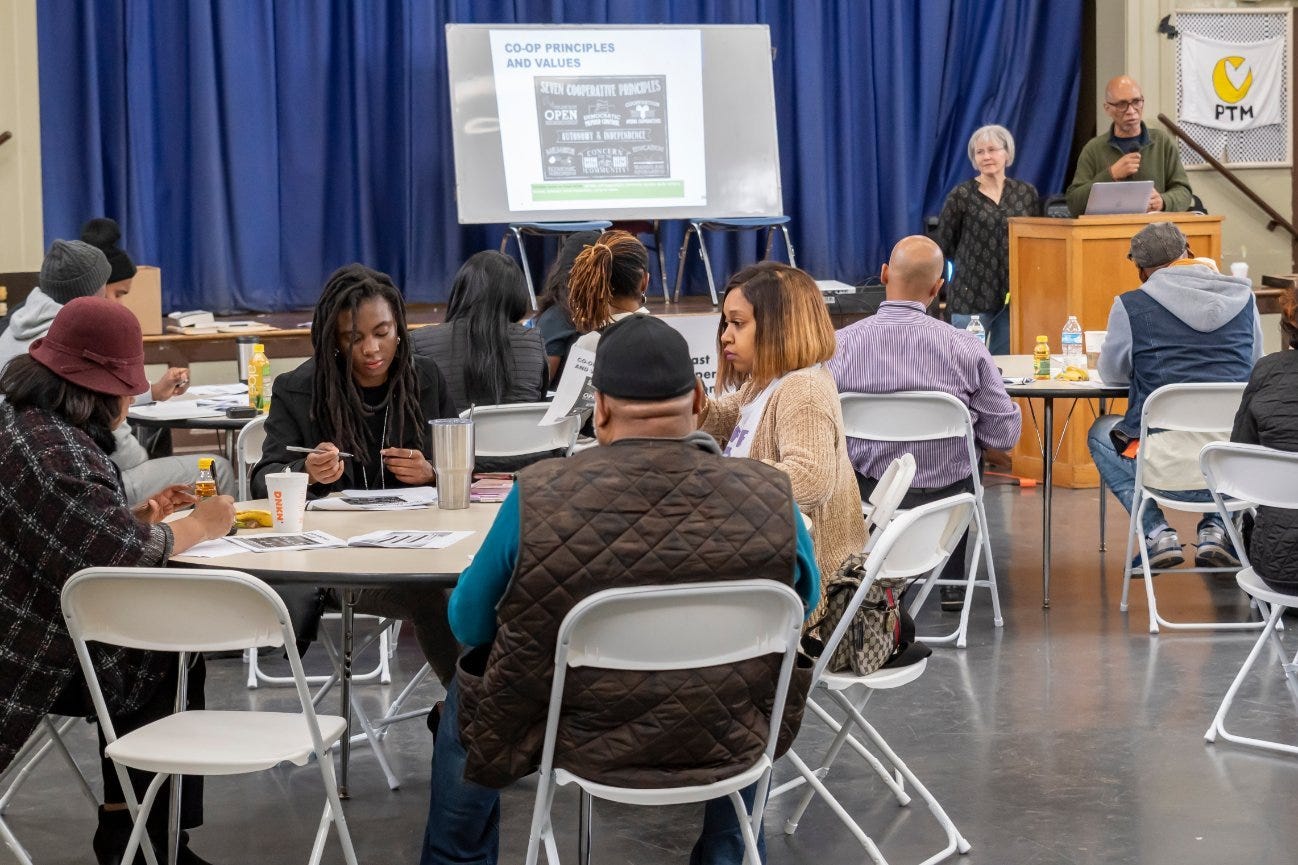
Worker co-ops impact more than just the immediate employee-owners. They create a whole new business culture by developing democratic workplaces with a voice in key decisions by the worker-owners, higher job satisfaction, and autonomy compared to traditional firms. They also create higher paying jobs. The average entry level hourly wage paid at all reporting worker cooperatives in a recent study was $19.67. This is over $12.00 more than the federal minimum wage that is currently still set at $7.25 per hour. In addition to wages, worker cooperatives distribute surplus earnings as patronage to the worker owners (usually based on the number of hours worked). The average distribution in 2019 was $8,241 per member.
The primary purpose of a worker cooperative is to benefit the member-owners and not maximize to profits for investors as is the goal for traditional investor-owned corporations. With profits circulating locally instead of being siphoned off by remote investors community wealth is increased. Since most workers are community residents, worker cooperatives are more likely than other businesses to employ sustainable business practices that do not harm the local environment. These community benefits are not short lived as studies of worker co-ops around the world show that worker cooperatives are more resilient compared to traditional small businesses, especially during economic downturns.
Furthermore, racial demographics show that the majority of worker co-op owners are people of color and/or women, with 58.6 percent of member-owners being non-white. The majority of the workforce at worker co-ops (62.5 percent) identifies as female. This shows that worker co-ops give individuals who are most often left out of entrepreneurship an opportunity to become business owners and economic players.
Employee ownership can also be a solution for the small business closure crisis mentioned above. By selling to their employees, owners can ensure a lasting legacy by retaining jobs in the community and keeping the business locally-owned. Conversions to employee ownership create community wealth by keeping money (and jobs) local for the long haul. With a focus on creating worker cooperatives in partnership with those communities left out of the economy we can democratize entrepreneurial opportunity to build an economy that works for all.
It will definitely take a village to address the economic challenges we face. And that is why we are turning to faith communities to build a collective vision of a just economy based on values that we share with each other, like solidarity, democracy, equity, equality, mutuality in terms of caring for each other, and being responsible towards each other and the community.
Together with our partners at the Wendland Cook Program in Religion and Justice at Vanderbilt Divinity School and with financial support from the Louisville Institute’s Collaborative Inquiry Team Grant a project was born to engage people of faith in creating a new, democracy-centered economy, one that works for all. We are excited to offer a virtual toolkit that seeks to put more people of faith on this path and helps them understand the deep connections of this project to their sacred traditions. Let’s “build forward” towards an economic future that creates equity and agency through shared ownership and control of land, labor, and capital to fundamentally reshape our relationships with each other and with the means of production. This is a monumental task that can only be built in solidarity.
Rosemarie Henkel-Rieger is a community organizer, author, lecturer, and a co-founder of the Southeast Center for Cooperative Development. She has been involved with worker rights advocacy as the community engagement coordinator with the Dallas AFL-CIO Central Labor Council and director of Texas New ERA Center/Jobs with Justice. Before working in nonprofit and cooperative development, Rosemarie worked in biotech research for many years and was a Montessori educator. She holds an M.S. degree from Eberhard Karls University (Germany) and an M.Ed. degree from Loyola University Maryland.
This Interventions forum was originally published in 2021.
Contributors: Larissa Romero; Rosemarie Henkel-Rieger; George Schmidt; Joerg Rieger.
Be sure to check out the Bible Study.